
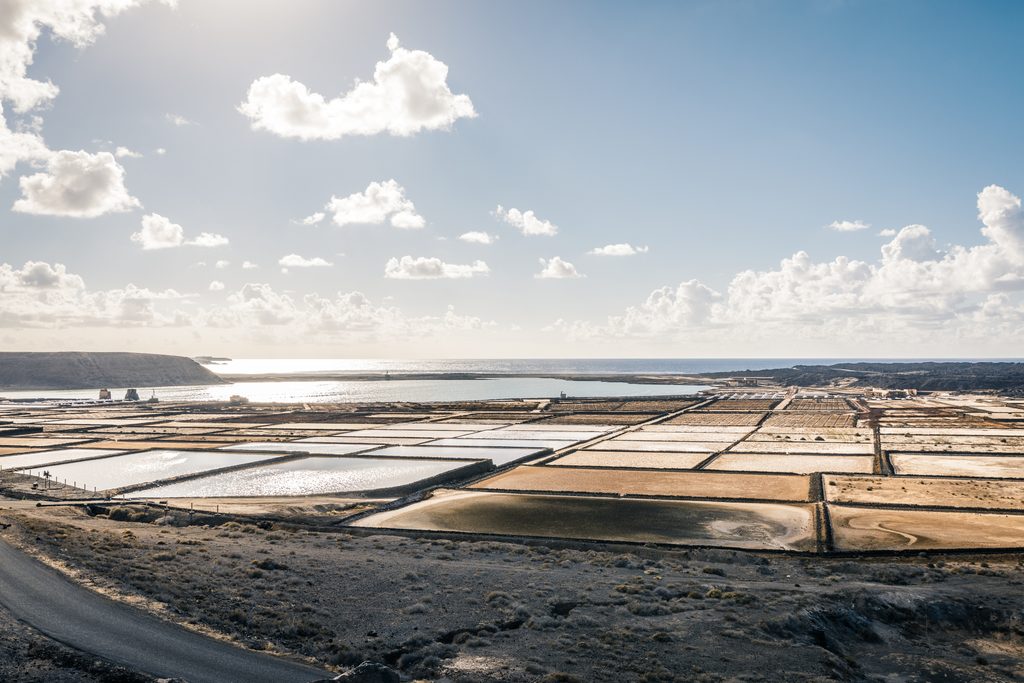
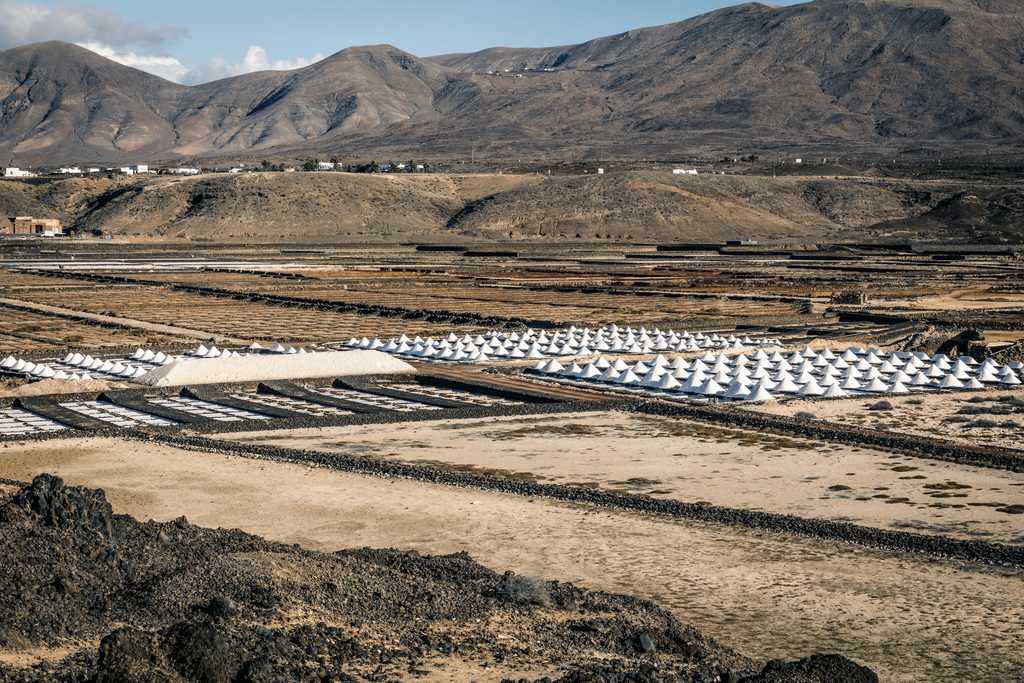
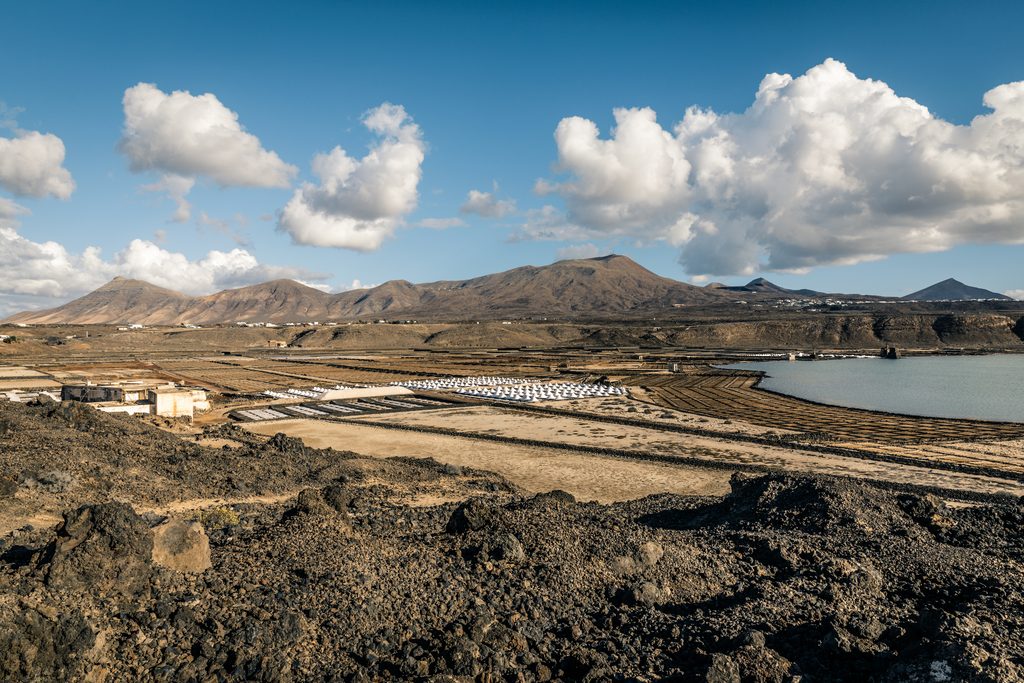
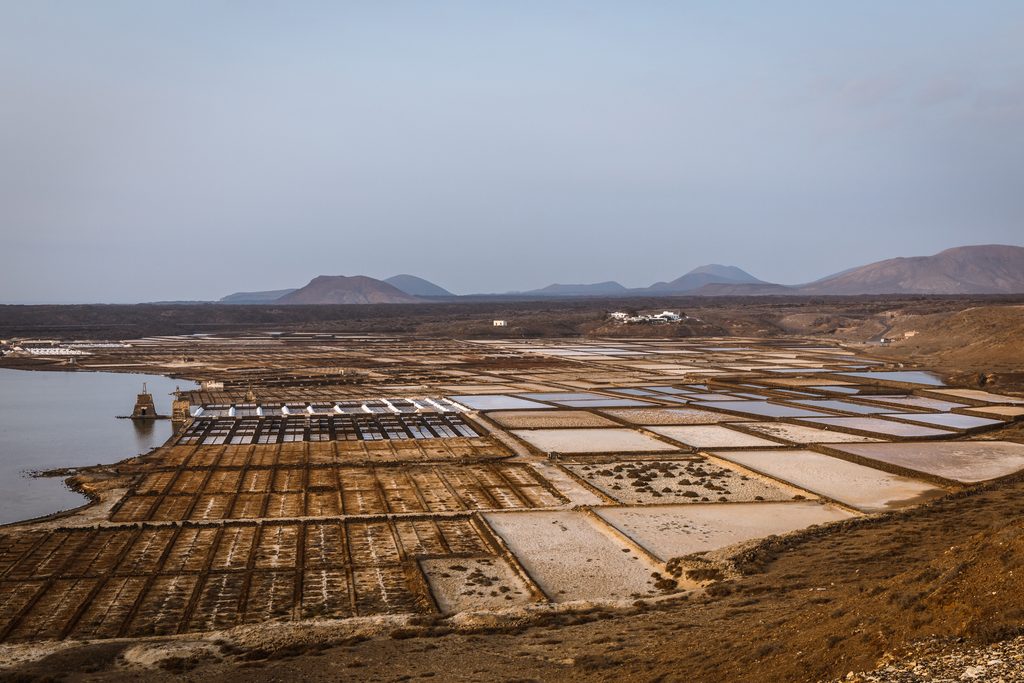
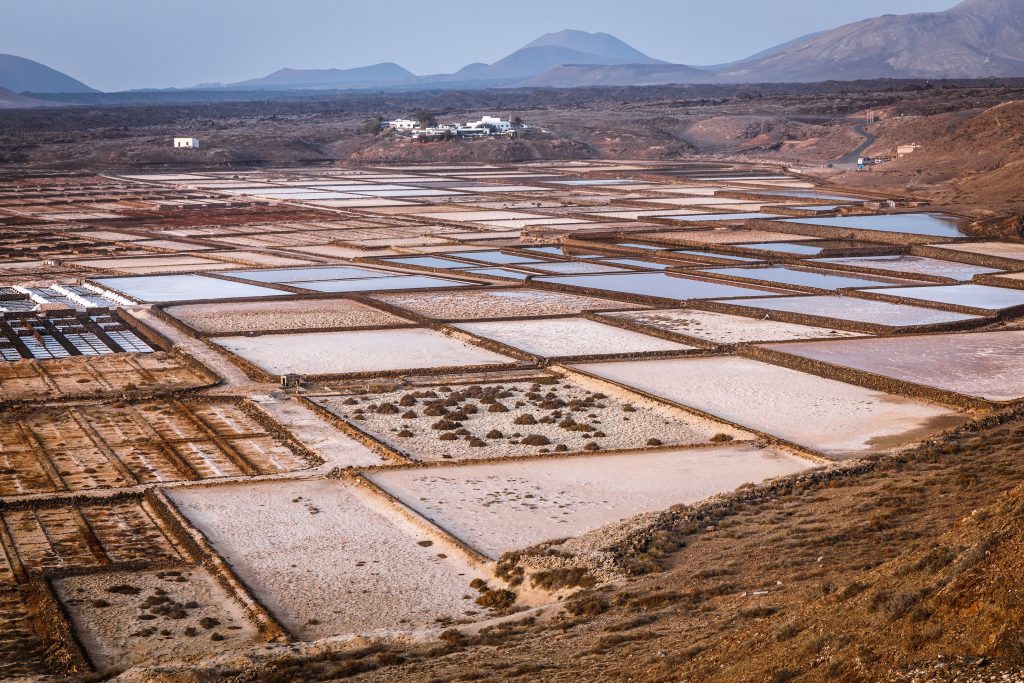
Across our two journeys to Lanzarote, few locations captivated my lens quite like the Salinas de Janubio. Situated along the island’s southwestern edge in the municipality of Yaiza, these salt flats were established around 1895 within a dramatic natural basin formed by the volcanic eruptions of 1730. Lava flows sculpted a sweeping lagoon roughly a kilometer in circumference, creating a vast natural amphitheater where sea water—channeled historically by windmills and now powered by modern pumps—slowly evaporates under the island sun. Still active today, it remains one of the largest working salt pans in the Canary Islands, as well as an EU-protected sanctuary for migratory birds.
Visually, the landscape unfolds like an intricate, geometric mosaic carved directly into the dark volcanic earth. Viewed through the changing daylight, the pans form a hypnotic patchwork of mineral tones—shifting from pale blush and dusty ochre to deep terracotta and glassy turquoise against the open Atlantic sky. Dark basalt stone walls frame each pool in a quiet, rhythmic grid, turning the raw power of Lanzarote’s volcanic soul into a delicate balance of reflection, shadow, and salt.
We visited the salt flats during two separate sessions, each offering an entirely different photographic canvas. On our first visit, the harsh midday light carved sharp contrasts across the terrain, turning the basalt partitions into bold graphic lines and emphasizing the stark, textured geometry of the salt beds against the deep blue water. Returning later for a second shoot closer to sunset, the atmosphere transformed completely. As the sun dipped lower, the blinding glare softened into a warm, lingering glow, setting the pools ablaze with rose-gold reflections and revealing subtle gradients of color that had been hidden under the direct sun. I hope you like them!
Good to hear from you again Mercedes, especially seeing your beautiful pictures.
Dear Anne,
How are you? I’m happy to know that you are still taking photos and blogging! 🙂
I’m starting to have a little bit more of time this school year, so, hopefully, I will find some spare time to start posting again! I didn’t want to mention it in my post, like in all I posted these last 5 years, hehehe but kids grow and I have so many photos in my laptop to share!
I send you a very big hug!